
The chip rebellion is on
6 insurgents reinventing chips
Dan, Matt Ridley, and I recently stood inside a Silicon Valley data center next to 600-lb. steel cages hooked directly into a power plant.
We watched cooling systems pump 100 liters of water per second just to keep the chips from melting down. The servers roared so loud we had to shout to hear each other.
This is the home of Cerebras.
Cerebras makes the largest computer chips in the world. And they’re built for one thing: running AI models faster than anyone else. Here’s a snap of its dinner plate-sized chips:
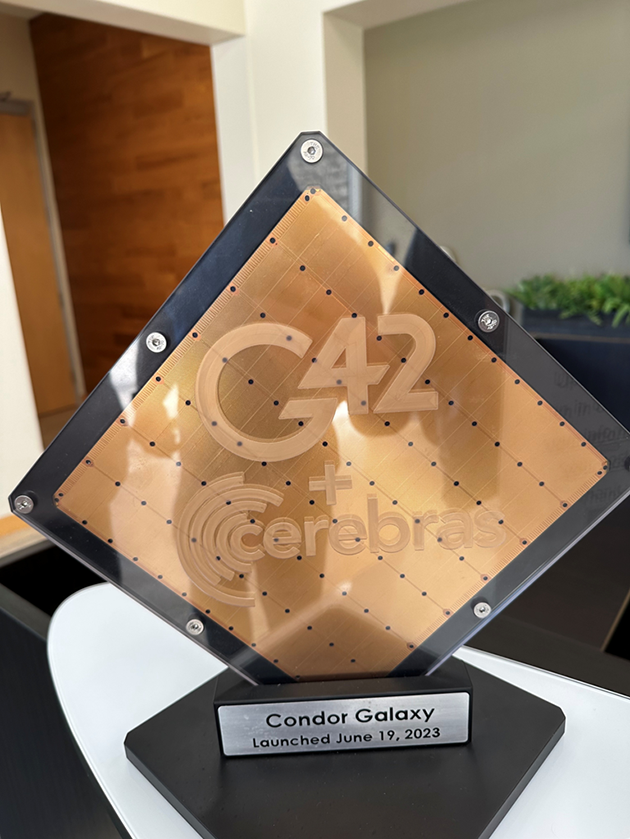
I’m a self-confessed chip geek. They’re the closest thing we have to magic. The chip inside the new iPhone packs 19 billion microscopic “switches” called transistors onto a square of silicon smaller than a fingernail. The chip above has over 4 trillion transistors!
Cerebras is only the beginning of the chip rebellion. For decades, the chip industry has been controlled by one king at the top—first Intel with CPUs, then Nvidia with GPUs.
Now an army of startups is storming the gates and making the chips the old guard said were impossible. I’ll introduce you to five more exciting chip insurgents rewriting the laws of computing.
Given all tech progress rests on chips getting faster, these innovators might be the most underrated startups in the world. They’re valued at less than $10 billion combined today. I wouldn’t be surprised if they’re worth $1 trillion a decade from now.
Put your sci-fi investor hat on. This bunch is building some alien technology.
Etched
Burning AI into silicon
NVIDIA invented graphics processing units (GPUs) in the early 90s to make video games look more realistic.
Decades later we discovered the same math used to draw pixels was perfect for powering AI. Today ChatGPT and most other top AI models run on NVIDIA’s chips.
But since GPUs have to be ready for anything, they’re inefficient at everything.
Two Harvard dropouts asked: “What if we built a chip to power AI and do nothing else?”
Enter Etched.
Etched made a “burn-the-boats” gamble and built a chip for one thing and one thing only. It can’t play video games or predict the weather. But it can run AI models at lightspeed because the rules are physically burned into the silicon itself.
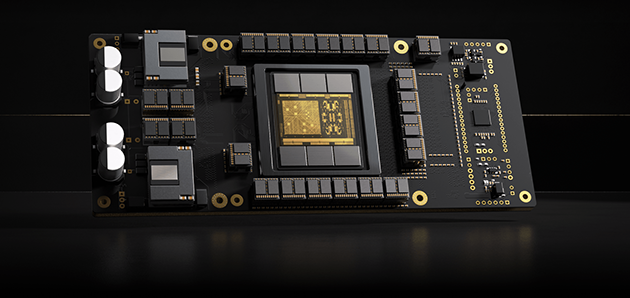
Etched claims one of its servers can replace 160 Nvidia GPUs. Check out its first chip, Sohu:
We’ve seen this shift toward specialized chips before.
In the early days of crypto you could mine Bitcoin on your laptop. As prices exploded companies started building chips specifically to mine Bitcoin. Now all bitcoin mining runs on specialized hardware.
Etched is betting AI plays out the same way.
The San Francisco-based startup raised money at a $5 billion valuation earlier this month.
Optimism Score 6/10. Specialization is usually how industries scale. But if AI’s underlying architecture changes, these super-fast chips may become super-expensive paperweights.
Extropic
Chips that run on noise
You know I’m skeptical of quantum computing. I think we’re still a decade away from a useful quantum machine.
But I am bullish on thermodynamic computing.
Usually when I look at a chip startup it’s at least playing the same sport as Intel and Nvidia. Extropic invented a whole new ball game.
Traditional computers need every “bit” of data to be a perfect 0 or a perfect 1. But the universe is hot and messy. Making standard chips work is like trying to balance a pencil on its tip. You have to constantly burn energy just to keep it from falling over.
Extropic built a chip to harness the natural “noise” of the universe as a free fuel source for computers.
Without getting too technical, this approach is perfectly suited for AI workloads. Extropic says it can run AI workloads using 10,000X less energy than traditional chips. Big if true!
Extropic is debuting its first Thermodynamic Sampling Units (TSUs) this year. TSUs look like something from Star Wars:
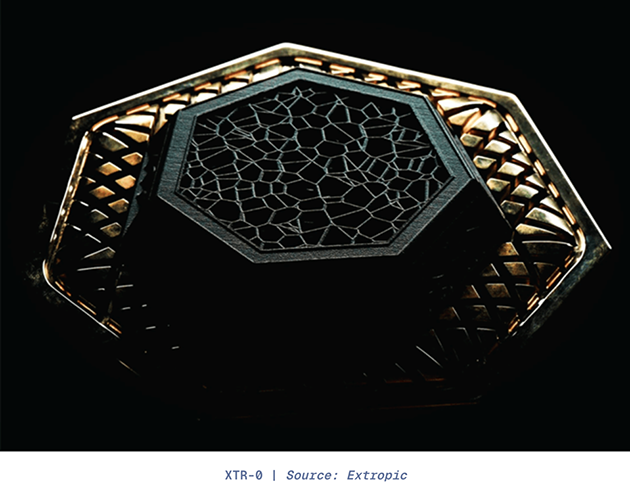
I met founder Gill Verdon in Detroit last summer and held the first prototype in my hand. You can also watch my interview with Gill here.
Optimism Score: 8/10. Extropic is a true moonshot and bends my brain to even think about. But if it works, it solves the single biggest problem in AI today: energy.
Lightmatter
Moving data with light
One of the big bottlenecks in AI today is that chips are fast but feeding them data isn’t.
More than 90% of an AI model’s response time is spent shuttling data back and forth through the copper wires linking chips together.
Lightmatter rips out the old copper wires and replaces them with a fiber-optic superhighway. Its “trick” is moving data as light instead of electricity.
Because moving light doesn't generate heat like moving electricity through copper wire, optical data can be packed closer together.
Lightmatter built a silicon wafer that sits underneath the chips. It contains thousands of tiny pipes, which allow data to travel at the speed of light between chips. It shoots 16 different colors of light down the highway at the same time.
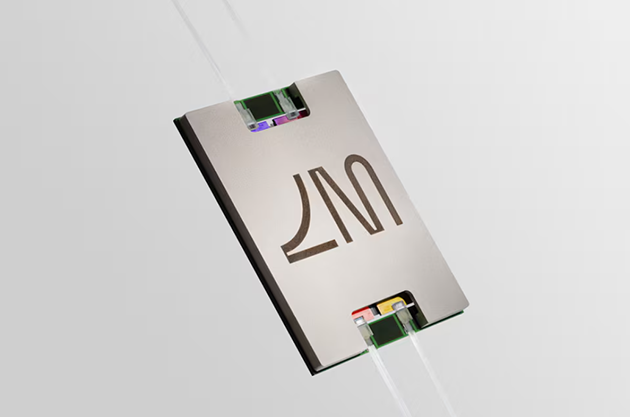
Lightmatter breaks the bandwidth bottleneck and turns a warehouse of disconnected computers into one massive brain.
Optimism Score: 9/10. This technology is inevitable. As AI models grow to Manhattan-scale power usage, copper wires will go the way of the dodo. The future is optical.
Substrate
X-ray printing
Inside that slim rectangle in your pocket is a computer chip with billions of electronic transistors.
Every year chipmakers manufacture more of these atomic-scale switches than all the grains of wheat and rice grown on Earth combined.
The machine that makes this magic possible is the Extreme Ultraviolet Lithography (EUV) tool, made by ASML in the Netherlands. Each machine is as heavy as a jumbo jet and costs over $400 million.
It “prints” transistors into wafers measuring only five nanometers wide. Three million transistors could fit inside the period at the end of this sentence.
As incredible as these machines are, they’re hitting a wall. To get the finer details onto a chip, you have to draw over the same line three or four times. It’s why a single cutting-edge chip wafer costs $100,000.
Enter James Proud, a Thiel Fellow who renounced his British citizenship to become an American—just so he could build a solution to this problem in the US.
Proud’s startup, Substrate, is building a chipmaking machine that prints with X-rays instead of UV light. X-rays have a much shorter wavelength, making them a much finer paintbrush. Substrate shared this microscope image of a wafer where it printed features roughly 12 nanometers wide:
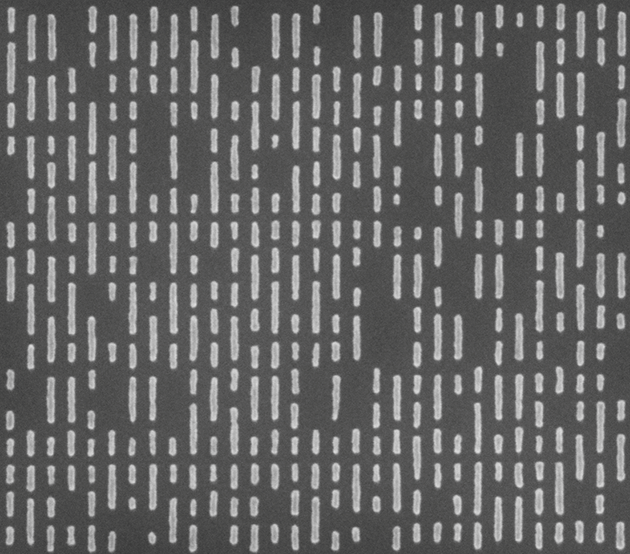
To generate X-ray beams Substrate creates light “billions of times brighter than the sun.” This allows it to print the tiniest features in a single, perfect stroke.
Substrate believes it can slash the cost of making leading-edge chip wafers from $100,000 to $10,000. And it doesn’t only want to sell the printers. It also wants to run the print shop.
Substrate wants to make the tools (like ASML) and make the chips (like TSMC). It’s attempting to take down two of the world's biggest monopolies with one tool.
Optimism Score: 8/10. Substrate is trying to “one-up” the most advanced machine on earth. Risk of failure is high. But if Substrate succeeds, it’ll change the world and reinvent computing.
Lab 91
Building 2D chips
We’ve been building chips out of silicon for 60 years. But we’re now trying to make transistors so small silicon atoms are simply too “fat” to work.
Austin-based Lab 91 is swapping out the silicon bricks for a “2D material” called Molybdenum Disulfide. You may have some in your garage right now—it’s a common ingredient in engine lubricants.
“Moly” is so thin it’s effectively two-dimensional. When you slice this greasy mineral into a sheet just three atoms thick, it becomes a perfect semiconductor. Electrons can zip through it with incredible speed, and it takes up almost no vertical space.
Lab 91 isn't just making the material. It’s building the machine that allows chipmakers like TSMC to “print” these atomic sheets onto wafers.
It’s starting with RF Switches, the radio chips in your phone that handle 5G signals. These are simpler to make than the “brains” of your computer.
Engine lubricant: the trick to allow us to keep making faster computers for another 20 years. Innovation is a funny thing.
Optimism Score: 7/10. The first chips were made of germanium, but we ditched it the moment we found something better. Now silicon has hit its own wall. It seems likely we’ll move on from silicon too. The only question is will it be “Moly” and how long will it take?
Tell me more about “Moly’s” famous cousin…
Several ROS members asked me about another 2D material, graphene. Storytime!
In 2004 two physicists at the University of Manchester were holding their weekly Friday night experiment.
They took a block of graphite (the same stuff in your pencil tip) and used ordinary Scotch tape to peel off a layer. They repeated this until they were left with a material only one atom thick.
Six years later that little Friday night experiment won them the Nobel Prize.
Graphene is a freakish material.
It’s 200X stronger than steel. An elephant could stand on a sheet of graphene as thin as cling film… and it wouldn't break.
You can bend graphene like rubber. And because it's only one atom thick (one million times thinner than a human hair) it's nearly invisible.
So why isn't the entire world made of graphene today? The problem is manufacturing. Making a microscopic flake with Scotch tape is easy. Making perfect, continuous sheets is hard.
Good news is we’re finally cracking the code on manufacturing graphene at scale. And it’s opening up some wild use cases:
Brain chips. Spain-based INBRAIN is building graphene neural interfaces that can detect brain signals at frequencies metal misses. The first human trials began in late 2024, helping surgeons distinguish between brain tumors and healthy tissue with extreme precision.
Green concrete. By adding just 0.1% graphene to the mix you can use 30% less cement to get the same strength. It’s already being trialed in construction projects.
Cooler computers. One of the biggest killers of batteries is heat. Graphene spreads heat 10X better than copper. Huawei is already using graphene films in its phones to keep them cool.
Bill Gates wrote in 1996: “We always overestimate the change that will occur in the next two years and underestimate the change that will occur in the next ten.”
Graphene was stuck for a decade while we figured out how to make it. Now the factories are coming online, and it’s full steam ahead.
Optical chips, thermodynamic computers, and graphene are just a handful of my favorite frontier technologies going from “impossible” to “inevitable.”
Which are you most excited for?
—Stephen McBride


