
Special update from Abu Dhabi
Updated: Mar 12
It's been an eventful week here in Abu Dhabi. So I decided to send you this week’s Diary early.
It all kicked off when America started bombing Iran last Saturday. Then Iran struck back.
I was walking my daughter to jiu-jitsu along the beach Saturday morning, and we heard two loud BANGS.
She asked what the sound was. I didn’t want to scare her, so I told her it was building work. But I knew exactly what it was—the sound of missiles.
My colleague Dan, a sheltered American (God bless him), pulled up a map and was surprised just how close Abu Dhabi is to Iran.
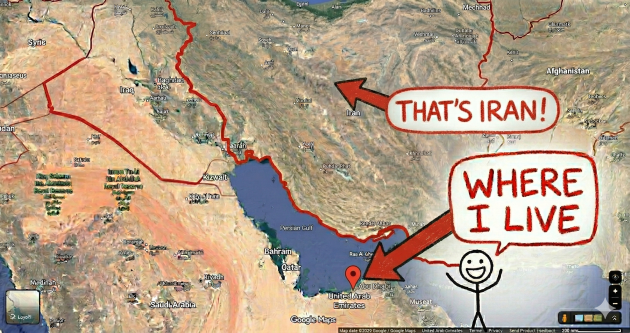
Iran lobbed over 200 ballistic missiles and 800 kamikaze drones at the UAE over the past few days. Virtually all of them were shot down by the UAE’s air defense system.
The interceptions rattled our windows. I logged onto the community group chat and saw people freak out, saying they were rushing their kids to the basement at 3 am.
Not exactly what my wife signed up for when we moved to the UAE. Luckily she's not the type to panic.
Our biggest hassle has been schools going remote for the week. Oh, and the airspace is shut. My sister-in-law was mid-flight from Ireland when it happened and had to turn back. I’m due to fly to Zurich on Wednesday to give a presentation. Pray I make it.
For now the missiles have all but stopped. All I hear overhead is the sound of fighter jets patrolling the skies. The kids are fine. Thanks to all the ROS members who sent well wishes.
Life here continues as normal. Gyms are open. Grocery stores, theme parks, restaurants—all open.
It’s certainly not the warzone the corporate media would have you believe. My mom made the mistake of watching the news and rang me crying, convinced Abu Dhabi was reduced to rubble.
For the past week my life depended on…
Patriot missiles.
The UAE used American-made Patriot (Phased Array Tracking Radar to Intercept on Target) missiles to stop the incoming barrage. Lockheed Martin is the only reason I wasn’t blown to smithereens.
Patriot missiles are awesome. They can track up to 100 targets at once, from 60 miles away. They obliterate their target by ramming directly into it at over 3,000 miles per hour.
There’s just one big problem.
They cost $4 million each, and we don’t make many of them. The US only produced 620 Patriots last year. Lockheed plans to scale up production to “a whopping” 2,000 per year… by 2030!
These missiles did an outstanding job protecting the Gulf over the past week. In the UAE alone they intercepted over 1,000 warheads and drones destined to kill.
But each one costs more than most people earn in a lifetime. And using $4 million missiles to destroy $20,000 drones is not sustainable. The UAE spent an estimated $1 billion per day on interceptions.
This illustrates a problem we’ve been talking about for a while: asymmetric warfare.
In Ukraine $500 drones packed with explosives routinely destroy $5 million tanks. In the history of warfare there has never been such an asymmetry between the cost of attacking and the cost of defending.
The math doesn’t work against enemies able to produce thousands of cheap drones. The defender goes bankrupt. You run out of interceptors before the attacker runs out of things to throw at you.
Which side runs out of ammo first could determine this war. For now it looks like Iran depleted its reserves. But it can make drones much faster than we can make missiles.
To quote Joseph Stalin…
“Quantity has a quality all of its own.”
7 days.
That's how long before America runs out of precision missiles in a Chinese invasion of Taiwan, according to war game simulations.
I've heard scary stats like this for years. It's one thing to read it in a think tank report. It’s a whole other ball game when your life depends on someone making enough missiles. Mine currently does.
What’s unfolding in the Gulf and Ukraine is the biggest shift in how wars are fought in our lifetimes.
War is moving from being dominated by big, expensive, exquisite systems to one where small, cheap and attritable wins. Unfortunately America and its allies are still fighting with the old playbook.
Five “prime” contractors control the US defense industry. Today 90% of all US missiles come from just three companies. Only three companies make US Air Force aircraft. There’s one main tank manufacturer in the entire country.
The main plant for high-volume artillery shell production churns out 40,000 rounds per month. Ukraine burns through that in roughly five days.
If you want to understand why mass matters in war, go read Arthur Herman’s Freedom’s Forge. It’s one of the best books I’ve read in the last few years. Here’s yours truly and Arthur in Detroit last summer:

Freedom’s Forge explains how WWII was won not just by soldiers on the battlefield, but by workers on the factory floor. Germany and Japan had better weapons. But America won the war through sheer, overwhelming volume.
Sound familiar? We’re on the wrong side of that equation today.
This is a technology problem, not a spending problem.
You can’t solve cost asymmetry by spending more money. You can only solve it by collapsing the cost of defense to match the cost of offense.
I see four technologies that will reshape defense. Over the past year we’ve met many of the founders pioneering these solutions.
From our conversations it’s clear the future of defense will be a layered stack. There will be different tools for different threats, all dramatically lowering the “cost per kill.”
No. 1: Shoot them down with light.
You’ve heard of Israel’s Iron Dome, which saved thousands of lives by destroying incoming rockets.
But do you know about the Iron Beam?
Iron Beam concentrates two high-energy laser beams onto a coin-sized point on an incoming drone or rocket. The beams burn through the target in seconds. Israeli defense company Rafael built the Iron Beam, and it’s now live in Israel.
The Iron Beam shoots down drones for a reported $3.50 per kill. For perspective the Iron Dome’s Tamir interceptor costs roughly $40,000.
That $3.50 figure doesn’t account for the roughly $1.5 billion it took to develop the system or the estimated $250 million per laser battery. The “all-in” cost is around $2,000 per kill.
But unlike missiles, a laser never runs out of shots. You just need electricity.
The Pentagon has tested laser weapons for decades, using electricity to heat a target with light until it melts or burns. Check out this image of a US military high-energy laser weapon test:

There are limitations. Lasers degrade in rain, fog and heavy cloud. That's why they can't be the only layer.
My No. 1 startup to watch in the laser arena is Aurelius Systems. San Francisco-based Aurelius is trying to make laser weapons cheap and scalable, like what SpaceX did to rockets. I met founder Michael LaFramboise last summer.
The Pentagon just awarded Aurelius a contract to develop its Archimedes laser system, which detects, tracks and takes out drones. Early days, but one to keep an eye on.
No. 2: AI-guided turrets that don’t miss.
For the threats lasers can't handle you need kinetic solutions. Bullets.
Enter Allen Control Systems (ACS) and its autonomous turret, Bullfrog.
Bullfrog is a 165-pound, AI-powered gun turret that can be mounted on a truck. Bullfrog gives an M240 machine gun computer vision and AI to identify and shoot down enemy drones autonomously.
Here’s me standing beside a Bullfrog in Detroit last summer:

My back-of-the-envelope calculations suggest turrets like Bullfrog are currently the cheapest “kinetic” solution. It’s already won contracts here in the UAE.
You can listen to my conversation with ACS CEO Steve Simoni here. Steve is the perfect example of the ambitious folks behind America’s defense renaissance. He spent years building products for software companies like DoorDash before deciding to help America win the drone war.
No. 3: Fight drones with cheaper drones.
If drones are the problem, why not use drones as the solution?
The leader here is Neros.
Neros makes small, cheap, disposable strike drones. Its Archer drone is the size of a dinner plate and weighs about 3 lbs. To launch an Archer, simply toss it into the air. These are the types of quadcopters dominating Ukrainian battlefields.
We visited Neros cofounder Olaf Hichwa in El Segundo back in November. Here’s the drone wall as you walk into its factory:
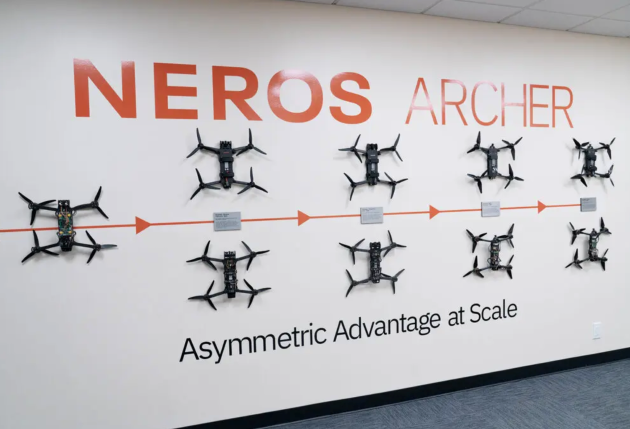
Neros’s story is almost too good. CEO Soren Monroe-Anderson is 22. His cofounder Olaf is 24. They were so obsessed with building and flying drones they skipped their senior proms. When they tried to sell to the military, a Pentagon official told them: “You can't just waltz into the Pentagon as 21-year-olds and sell weapon systems to the D.O.D.”
Two years later they’ve won contracts with the Army and Marines and are building a 250,000-square-foot factory to make a million drones a year. Neros will be America’s largest drone producer by an order of magnitude this year.
All Neros has to do is repurpose its attack drones into interceptor drones.
Using swarms of cheap drones instead of expensive missiles is already happening in Ukraine. “First-person-view” drones repurposed as interceptors downed over 850 Russian reconnaissance drones in the past few months.
No. 4: Jam them before they arrive.
Electronic warfare (EW) is the most underappreciated layer of the defense stack.
Most drones rely on GPS for navigation and radio links for control. This is how a soldier crouched in a bunker can fly drones into targets a few miles away with just a VR headset and controller. But jam those signals, and the drone goes blind.
The spectrum war is invisible, but it’s already shaping the battlefield in Ukraine and elsewhere.
CX2 Industries is our No. 1 “seed” in electronic warfare.
“We're building night vision goggles for the battlefield. If an enemy system emits a signal, it dies.” That’s what CX2 founder Nathan Mintz told me when we met late last year:
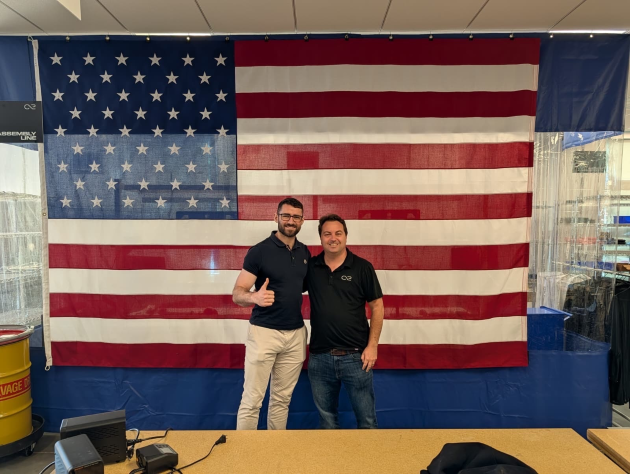
CX2 isn’t just jamming drones. Nathan’s point is the entire electromagnetic spectrum has become a new battlefield. Any machine America sends into battle needs EW solutions.
CX2 is building the tools to dominate this new battlefield, and EVERY defense company will need them. It could be the NVIDIA of the defense renaissance.
The advantage EW has is you’re not firing a missile or a bullet. You're projecting energy, which is highly repeatable. Squint and you start to see a defense architecture where the cost of defending approaches the cost of attacking.
That flips the math back in our favor, which is why I'm optimistic. Watch my full conversation with Nathan here.
This week was a wake-up call.
I'm grateful for the Patriots that kept us safe. But the future belongs to the startups building lasers, AI turrets, interceptor drones and jamming systems that do the same job for orders of magnitude less.
Patriots: $4 million per kill. Lasers: $2,000. AI turrets: $200. Interceptor drones: $3,000. Electronic warfare: the cost of electricity. That’s where war is going.
I’m meeting many of these founders I introduced you to today in a few weeks. I’ll report back. And remember to click “like” and “restack” below to help us share rational optimism.
—Stephen McBride


