
America’s drone comeback starts now
In today’s Diary:
Two 20-year-olds vs the Pentagon
An invisible drone ocean
Shoot the archer, not the arrow
48 drones packed like ice pops
Make sure your kids know this
Hey Rational Optimist,
All is good here in Abu Dhabi. Schools are back open. Airplanes are flying.
One thing is noticeably worse: shipping and grocery costs. I walked by four slices of pineapple at the grocery store yesterday: $25. Yikes!
The last few weeks I’ve personally felt just how much drones have transformed warfare.
It’s one thing to read about drones. It's another to hear Patriot interceptors whistling overhead and feel your windows shake.
A few weeks back an Iranian Shahed drone slammed into an AWS data center here. That same week a drone strike shut down one of Abu Dhabi's largest oil refineries.
Iran’s Shahed is the poster boy for this new kind of war. Since the conflict kicked off the UAE alone intercepted over 2,250 of them.
The Shahed is the latest dot on the most important chart in modern defense: the cost-per-kill curve:
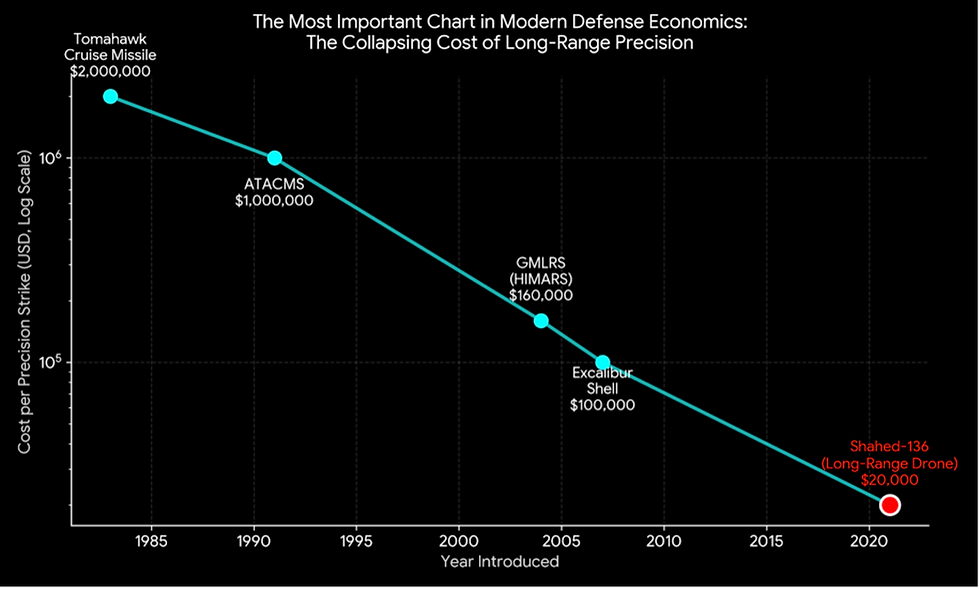
America has some cheap drones on the battlefield. But for the most part we're still shooting down $20,000 Shaheds with multi-million-dollar missiles.
That can't last. Even if the math doesn’t bankrupt us, we will run out. We only make a few hundred of these missiles a year.
That, my friend, is a problem.
But at the core of rational optimism is a simple truth. For every problem, somewhere out there a very smart person is quietly working on a solution.
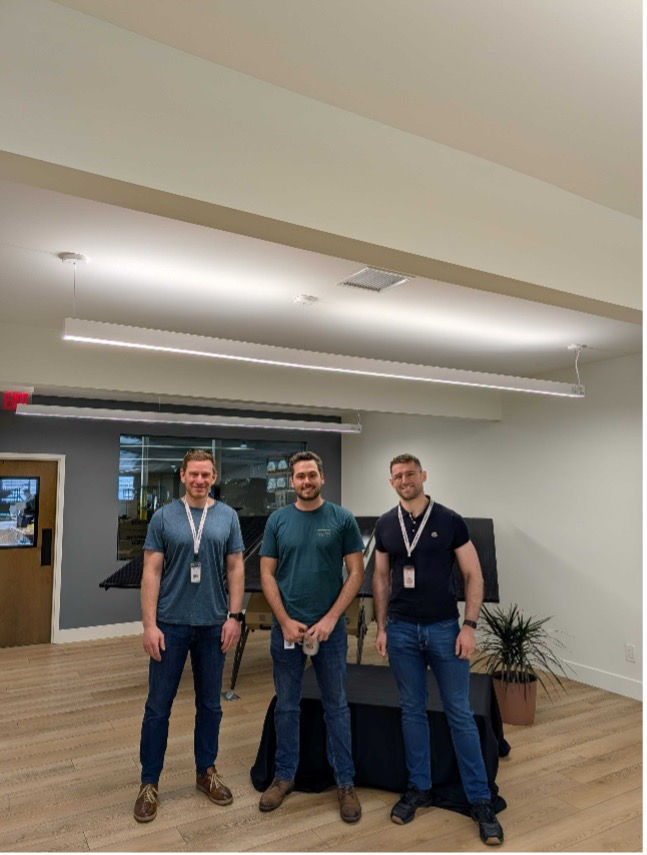
I met four of them on my recent travels across America.
When the war in Ukraine kicked off...
Olaf Hichwa was a 20-year-old kid trying to build kamikaze drones in a garage with his buddy, Soren Monroe-Anderson.
When they tried to sell their drones to the Pentagon they were told “You can't just waltz into the Pentagon as 21-year-olds and sell weapon systems to the DoD.”
Now that’s exactly what they're doing.
Their company is called Neros. Its quadcopter drone, Archer, costs about $2,000. The US Army just ordered tens of thousands of them.
We met Olaf at the Neros factory in El Segundo late last year. He walked us along the stations where they were assembling about 2,000 drones per month by hand.
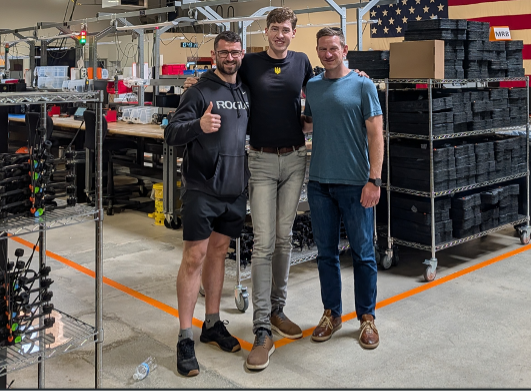
Olaf was candid about how far ahead China is in drones. Neros’s best onboard camera looks, in Olaf’s own words, “like a 1980s TV.” The Chinese equivalent is crystal-clear and 10 years ahead.
Why such a big gap? Roughly 100,000 people are working on AI drones in China. In America the number is closer to 1,000. In Shenzhen you can buy any drone part you want in hours. Building a drone in America without Chinese parts is almost impossible.
Olaf’s plan to close that gap is called “Project Millennium.”
Neros just moved into a new 250,000 sq. ft. factory in LA to pump out 100,000 drones this year.
Neros is also starting to manufacture critical parts like radios, motors and flight controllers for the entire US drone industry. It’s building the supply chain America doesn't have—and desperately needs.
Air power has always trickled down from the top. Neros gives every platoon its own air force. Talk to Olaf and you realize every infantry squad on Earth is now its own Top Gun.
A soldier with a backpack of Neros Archers can now strike targets and jam enemy signals. In Ukraine soldiers wearing goggles crouched in a bunker are routinely taking out a $5 million Russian tank with a $400 quadcopter.
Shoot the archer, not the arrow
That’s CX2’s approach. Founder Nathan Mintz is one of my favorite entrepreneurs. I’m betting CX2 will be his third billion-dollar startup, after Epirus and Spartan Group.
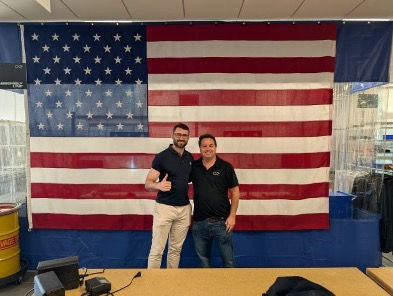
CX2 builds jamming systems to take out enemy targets.
The electromagnetic spectrum is the invisible ocean of radio waves every drone and missile swims in. Drones go dark the moment they get jammed. Their video links drop, and the drone crashes into a ditch.
Likewise you can “spoof” million-dollar missiles. During the early days of the Ukraine war US-made missiles missed their targets 90% of the time because of jamming.
In modern warfare he who controls the spectrum wins. CX2 created a three-piece weapon system to do exactly that.
First its “bloodhound” drone (Wraith) finds enemies on the battlefield. Then it launches the “assassin” (Banshee) which autonomously tracks the system launching the drones, and destroys it.
CX2 also has Vadris, which looks like a Chinese food box. Bolt it onto any drone and it suddenly has night-vision goggles for radio waves.
I spent time with Nathan in LA a few weeks ago. He told me CX2’s orders tripled in the past few weeks. I bet every Gulf state and American base in the Pacific is calling Nathan right now.
Remember, a Shahed shut down a multibillion-dollar AWS data center a few weeks ago. A new billion-dollar market for counter-drone solutions is sprouting before our eyes.
Wouldn’t you rather CX2’s jamming systems protecting your AI warehouse than rely on expensive and limited Patriots?
The US military spent two decades building the most exquisite “arrow-shooters” the world has ever seen. CX2 crafted the cost-effective alternative. It will win.
I had never held a drone as small as a soda can.
The first thing I noticed when I picked it up was how light it was. “Seeker” only weighed 250 grams, less than a block of butter.
When I met Mara founder Daniel Kofman, I asked him how much damage something this light could do. He assured me it could take out a Shahed.
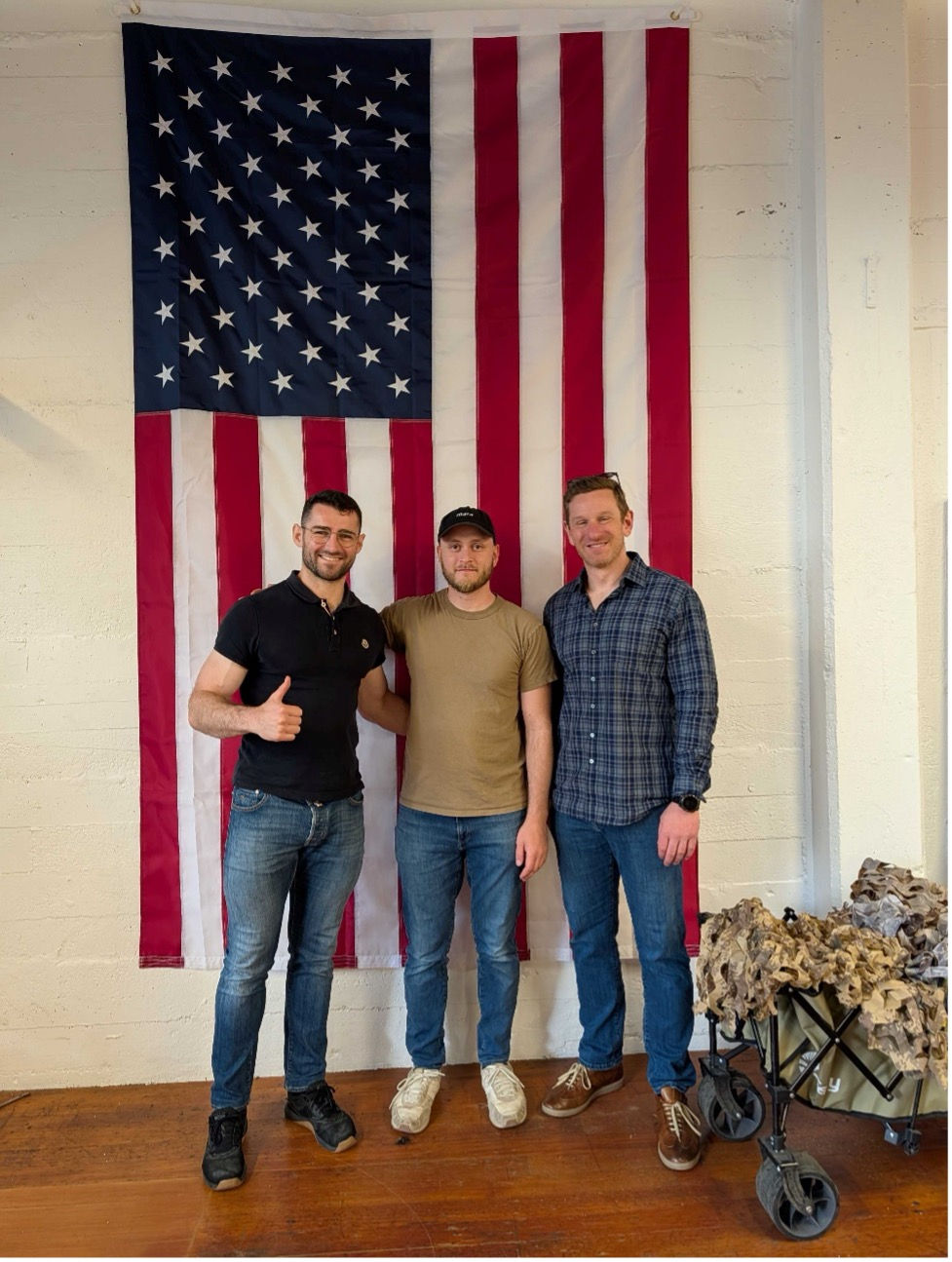
Seeker is Mara’s first interceptor drone. It destroys incoming drones by crashing into them. It costs only a few thousand dollars and is small enough that two soldiers can carry dozens of them in a backpack.
Seeker has the potential to flip America’s cost asymmetry disadvantage on its head.
Without giving exact figures, it’s FAR cheaper than a Shahed.
The day we met Daniel at his San Francisco office he was testing drones on the rooftop. He invited us up.
Mara’s Spotter system looks like an “orb” and uses built-in cameras and a listening system to detect threats. It sits there listening for the whir of incoming drones.
When Spotter detects a threat it instantly triggers an army of Seeker interceptors to attack. Seekers come packed like cheap ice pops, 48 in a bunch.
Daniel believes the only way to win in the drone era is to flood the battlefield with autonomous interceptors that cost less than the threats they kill.
Mara is early in its journey and working to fill a crucial gap. I’ll be watching closely.
Meet the Switzerland of defense tech
Zane Mountcastle and his team at Picogrid are solving the most overlooked problem in defense tech.
Today soldiers on the battlefield use dozens of different systems. They were all built by different companies—and none of them “talk” to each other.
Picogrid is building a universal translator that connects all the different systems. And because Picogrid doesn’t make its own competing systems, everyone trusts it.
This is a truly unique position in defense. Anduril can’t play this role because it builds weapons that compete with half its partners. Same for Lockheed. Only a neutral party can be the translator.
Picogrid’s Legion software is fast becoming the operating system of the battlefield, and it’s being built in a warehouse in El Segundo. It sucks in data from dozens of drones and weapons systems. A soldier can open a laptop and instantly see everything on one screen.
Not as sexy as kamikaze drones… but boring often wins. And Picogrid is winning.
It just got the cyber equivalent of a top-secret clearance for its software. It also has live programs with the Army, Air Force, Space Force and Special Ops.
When we met Zane last month he told us, “The future of defense has hundreds of winners.” A welcome change from five big, bloated primes winning all the contracts.
Every new defense startup that gets funded makes Picogrid more valuable, because they all need a way to talk to each other on the battlefield.
Picogrid could be among America’s most valuable defense tech companies in the next few years.
Founder-led startups are transforming the American defense industry.
The big primes like Lockheed, Raytheon and Boeing won’t disappear. They will be slowly eaten alive by a new generation of founder-led companies that fundamentally care more and move 10X faster.
We’re still early in this transition. Defense startups captured just 1% of Pentagon contracts last year. And there’s room for both startups and the primes. F-35s and Neros’s kamikaze drones aren't competing for the same job.
But the decisive weapon is no longer the most expensive system. It's the cheapest one you can make in the biggest numbers.
Every founder I met on this trip is under 45. They’re serious.
And they’re not in it for the money.
The money will come because they looked at the world, saw what’s coming, and decided to build.
Remember in 2018 when Google employees protested Google’s work with the Pentagon and got the contract cancelled?
What a difference a few years can make. Six years ago Stanford students were marching against Palantir. Now they’re dropping out to start defense companies.
If you're an investor: Stop treating defense tech as a niche sector. It’s 5% of global GDP and roughly 0.5% of venture portfolios. That ratio is about to correct violently.
If you're a parent like me: The highest-status career in a decade will not be investment banking or coding. It will be building hard things that matter, including factories, reactors, drones and autonomous ships. Make sure your kids know that.
The US and its allies are behind. China produces one DJI drone per second.
But America is full of high-agency entrepreneurs who figure things out when it counts.
It happened back in 1941. And it’s happening again in El Segundo and across LA today.
—Stephen McBride


