
SpaceX is the new Harvard
Updated: May 14
In today’s Diary:
The most important city in the world
Ian will steamroll the competition
The Idiot Index
Satellite bodyguards
IKEA instructions for rockets
Hey Rational Optimist,
I told a group of 25 investors last month: Los Angeles is going to be the most important city in America for the next 20 years.
They looked at me like really, LA? With its punishing taxes and dysfunctional regulations?
Yep. And it’s all because of the new SpaceX mafia.
You’ve probably heard of the PayPal Mafia. When eBay bought PayPal in 2002 its founders took the money, scattered, and built the next generation of digital monopolies.
Peter Thiel founded Palantir and seeded Facebook. Reid Hoffman set up LinkedIn. Chad Hurley and Steve Chen started YouTube. Max Levchin founded Affirm.
Elon Musk—who had merged X.com into PayPal two years earlier—went a different direction. He took his payout and leased a small warehouse in the El Segundo area of LA.
He bolted a sign on the front that read “Space Exploration Technologies Corp.”
SpaceX is now set to go public at $1.5 trillion+. The largest IPO in history.
Most people still think SpaceX is “just” a rocket company. But it's actually a machine for producing world-class talent. A talented engineer takes a job at SpaceX, learns the Elon Musk “way” of solving impossible problems, then graduates as a force of nature ready to transform other industries.
After meeting dozens of SpaceX graduates in warehouses across LA, I’m convinced:
The SpaceX Mafia will create more wealth than the PayPal Mafia—possibly more than all of Silicon Valley combined.
If you can track only one alumni group in business today, this is the one. SpaceX is the new Harvard.
A hedge fund buddy of mine told me: “I'd pay real money for a database of ex-SpaceX employees.”
Meet the four horsemen of the SpaceX Mafia.
Machina Labs was founded by Ed Mehr, a former SpaceX employee. Now Ed is reindustrializing America with robo-blacksmiths.
Roughly 80% of the metal around you—car doors, fridges, airplanes, and missile fins— starts off as a flat sheet that gets stamped into shape. Stamping is fast but brutally expensive. A single modern stamping line costs $150 million+. In this world it only makes sense to stamp a shape if you're going to make millions of that shape. So we get millions of identical F-150 trucks.
Machina's breakthrough is a technology called robo-forming. Picture a pair of giant orange robot arms. At the end of each arm is what looks like an enormous ballpoint pen. The arms press against opposite sides of a sheet of metal, shaping it. Millimeter by millimeter the metal is formed into a custom shape.
When Dan and I visited, we saw a submarine hull being made:
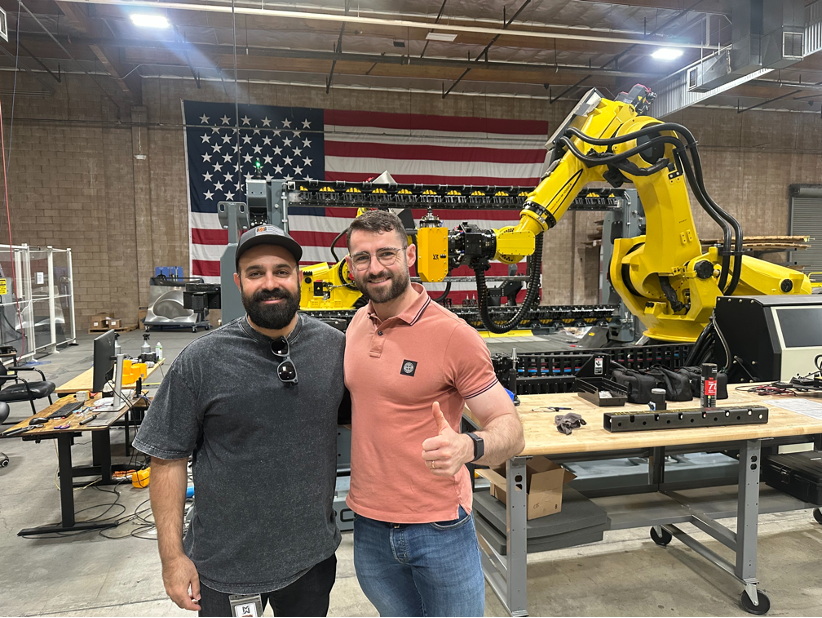
Machina can even form titanium at room temperature, formerly considered impossible.
Ever hear of the idiot index?
It’s the ratio between the raw material cost of a part and its finished product price. And it’s gospel for the SpaceX Mafia.
In the early SpaceX days, Elon realized a rocket’s raw materials are only about 2% of its price. The other 98% is labor, supplier markup, and laziness.
Every industry has an idiot index, and the SpaceX Mafia has X-ray vision for waste.
Ed showed us a piece of metal sitting on a cart. “That part goes on a nuclear submarine. The Navy pays $200,000 for it. I made it from a $300 sheet of steel. It took 6 hours. The traditional supplier takes months.”
Machina’s robo-blacksmiths are restoring a B-17 bomber for the US Air Force, making panels for F-35 fighters, and producing components for NASA’s lunar program.
“That was HARD.”
Ian Cinnamon said this like he was describing the last few miles of an Ironman.
Experts told Ian it would take three years and $50 million to get his first satellite to orbit. He and his cofounder Max Benassi did it in 12 months for under $10 million.
I spent an afternoon with Ian at Apex Space’s 50,000 sq. ft. factory near Santa Monica. The company is just 3.5 years old. It’s already a $1 billion unicorn.
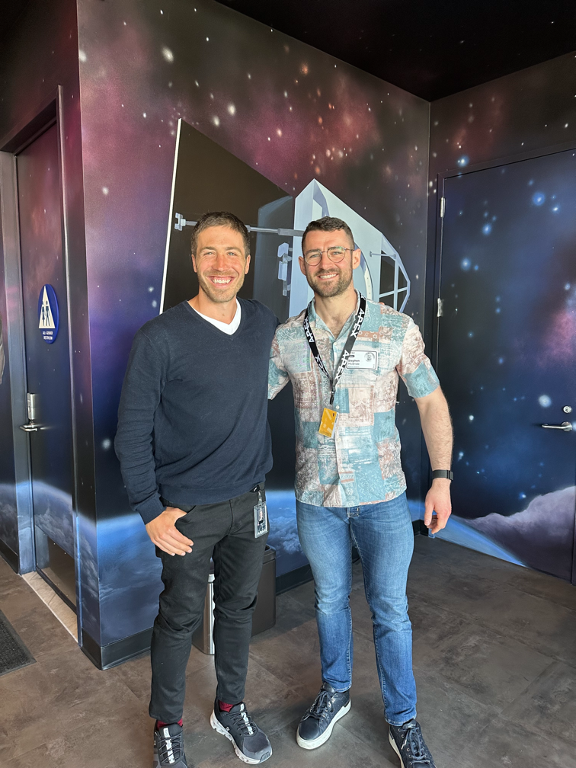
“Old space” companies ship 2-3 satellites a year. Apex is scaling to 150 satellites a year. On the factory walkthrough I saw a row of five satellites being assembled by engineers in clean-room bunny suits.
We throw the word satellite around like we know what it means. But it’s really two things:
Payload: aerospace jargon for the actual thing that does the mission. The camera, radar, laser or antenna.
The bus: This is the structure housing the power system, propulsion, radios and cabling. Without the bus the payload is a very expensive brick.
Satellite buses have always been expensive and hand-crafted. That’s why they take years to make and cost tens of millions of dollars.
One principle you learn from talking to enough SpaceX mafioso is: question every requirement.
Elon questioned whether spaceships needed elaborate navigation systems. What if they just gave astronauts a joystick? They ran the experiment and discovered, no, humans can’t joystick a 7-ton rocket travelling at hypersonic speeds. But only at SpaceX could you ask and answer the question!
Ian and Max did the same with satellite buses. Instead of taking it as fact that every bus needed to be custom, they built and designed three “off the shelf” sizes.
Its first bus, Aries, costs $3.5 million and can carry 100kg to space. Northrop Grumman charges $30 million to 50 million.
No wonder Apex's customer list reads like a who’s who in space innovation.
Ian is one of the nicest guys you’ll meet. He is going to steamroll the competition. Apex will be worth at least $10 billion within a few years.
12,000 satellites are active in space.
Some cost less than a house. Others cost more than a skyscraper.
These machines power GPS, internet, weather forecasts, military communications, financial markets, and global shipping. The value riding on them is worth far more than what they cost to make.
We built a civilization that depends on space. Now we need the ability to defend it.
Adversaries are already exploiting this. There’s a documented case of a Chinese spacecraft grappling another satellite and pulling it out of orbit.
This is why Michael Smayda is building satellite bodyguards.
Michael joined SpaceX in 2012 to work on reentry. Ever wonder how a 230-foot rocket travelling 1,200 miles/hour can launch into space and then land vertically on a basketball-court-sized platform? Thank Mike for that:
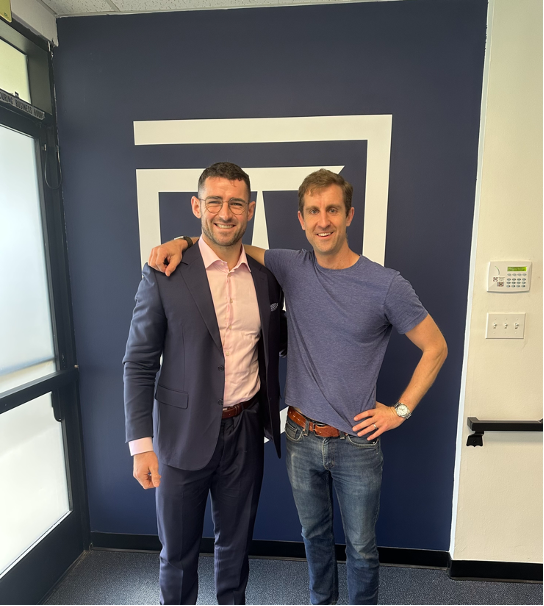
Mike founded Fortastra last year. He’s also a co-founder of hypersonic jet leader Hermeus.
Fortastra is inventing a new type of spacecraft designed to maneuver and defend other satellites.
Elon wants to put a million satellites in space to build orbital data centers. Just like AI warehouses here on Earth have security, so too will those in space.
NASA spends a decade building a rocket and prays it works. SpaceX builds a rocket in 6 months, blows it up, learns, and builds another. That’s the approach Fortastra is taking to maneuverability in space.
Whoever ends up owning the “defender” layer in orbit will become a multibillion-dollar company. I think that company will be Fortastra.
SpaceX’s Falcon 9 rocket has 75 miles of wire.
A modern airliner has 300 miles of braided cables carrying power and data.
Every wire was cut, stripped, routed, tied and tested by hand. Every wire must be the right length, crimped to the right force, routed through the right path. This is how we build the electrical nervous systems of every serious machine in the year 2026.
Jordan Black is solving the most boring crisis in American manufacturing: wire harnesses. A wire harness is the electrical nervous system of any modern machine. A car has about 40 harnesses which make up as much as 25% of the total cost.
Last month we visited Jordan and his team at Senra Systems’ facility in Redondo Beach:
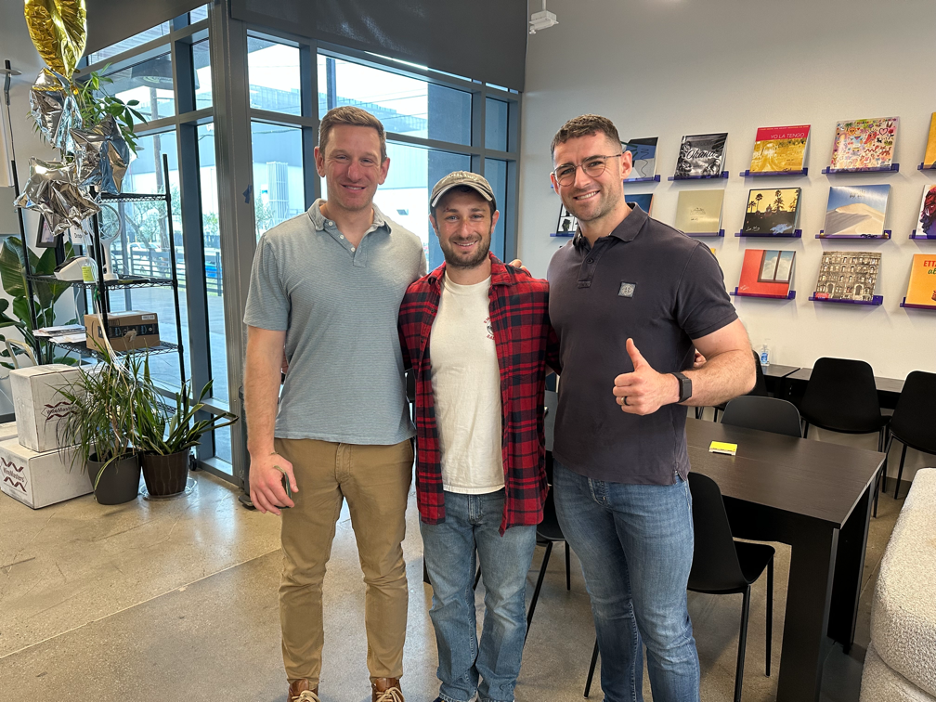
Jordan became the youngest manager ever on SpaceX’s Avionics R&D team. While he was there, he discovered roughly 40% of technicians’ days were spent reading spec sheets. In other words, nearly half of the most talented aerospace technicians were stuck trying to decipher instructions!
That’s why even at SpaceX it takes technicians 12+ months to learn wire harnessing.
Jordan’s first instinct was to delete the step by making the wire routing instructions as easy to follow as IKEA instructions.
That insight became Senra Systems. Senra built software that allows engineers to design a new wire harness in minutes.
Senra can deliver wire harnesses in roughly two weeks versus the industry standard six months.
It’s currently producing roughly 1,000 harnesses/month, many of which go to the world’s largest aerospace and defense companies. Senra's targeting 10,000 harnesses/month within a year out of its new 80,000 sq. ft. factory in Cypress, CA.
I asked Jordan the question I ask all SpaceX alumni: What’s the most important thing you learned at SpaceX? He answered, “There is always a way to overcome challenges.”
If you’re an investor: track the SpaceX Mafia.
Otherwise you're missing the best deal-flow filter in hard tech today.
And if you’re a parent like me: teach your kids that the most meaningful and lucrative careers of the next 20 years are likely in the physical industries SpaceX Mafia members are reinventing. Go tour their factories!
Everyone will have an opinion on SpaceX’s $1.5 trillion IPO. But the real story is being written in factories and warehouses across LA.
And it’s the most rationally optimistic thing I've seen in a long time.
—Stephen McBride


