
We must defeat B.A.N.A.N.A.
“Whole Foods wouldn’t exist if we’d followed the rules.”
That’s what John Mackey, founder of Whole Foods, told us at dinner in Austin.
In 1978 John and his partners scraped together $45,000 and rented an old house to convert into a natural foods store.
City inspectors came by and demanded architectural reports and permits he couldn’t afford. One day John broke down to his landlord, an old Lebanese man who said:
“John, city inspectors don’t work at night… build your store at night.” So he did.
Whole Foods, which transformed how millions of Americans eat, only exists because John Mackey skirted the rules!
And that was the 1970s. Overregulation is 1,000X worse today.
What other innovators never got the chance to build?
We zigzagged across America with Matt Ridley, the original Rational Optimist…
Meeting with founders building mini nuclear reactors… asteroid mining satellites… supersonic jets… flying robots… AI tutors and much more.
It was a research trip for Matt’s next book, a follow-up to 2010’s The Rational Optimist. The big question we wanted to answer was: How great will the future be? A wonderful, prosperous future is within reach… but it’s not a foregone conclusion.
After chatting with over 40 founders, I’m sorry to say “The Blight” is still a big problem.
The Blight = the absurd tangle of rules and agencies choking America’s future and making it nearly illegal to build anything ambitious in the physical world.
What I heard from founders on our trip was… concerning.
We live in a B.A.N.A.N.A. economy: Build Absolutely Nothing Anywhere Near Anything.
I love telling stories of innovators changing the world. But all that ingenuity doesn’t matter if their inventions are outlawed.
Let’s look at five instances of bureaucracy stealing the future we were promised. Out of respect for the innovators, and because spiteful bureaucrats are very real, I’ll keep names vague.
The poster child of B.A.N.A.N.A. world
Supersonic flight was an early victim of overregulation. We could cross oceans in a few hours for the first time in human history…until a handful of people complained about the noise.
Thankfully, supersonic regulation is being rolled back at the national level.
But when I met the founder of one of America’s top supersonic startups and congratulated him on the end of the 52-year supersonic ban, he looked me in the eye and sighed:
“The Fire Department is the problem.”
The fire department? I hadn’t heard that one before.
Turns out he needed to move a trailer five meters—on his own site—to start testing his jet.
The local fire chief didn’t like the plan and told him no. No reason given. No way to appeal the decision.
It also took this same company longer to get the permits to build their supersonic factory than to actually build it. Regulators demanded he get approval for how much noise his nonexistent airplane would eventually make… before the factory that would produce the plane was even built!
This conversation was frightening and reminded me progress isn’t inevitable. Some random local bureaucrats might be the reason we don’t get to fly supersonic.
“A district attorney sends me a letter every month threatening to put me in jail…”
That’s what one of LA’s most ambitious young founders told me.
His crime?
Trying to solve water scarcity by using drones to make it rain.
This tech has been around for decades. A long trail of studies shows it’s safe, and it works. His startup just inked a deal to help replenish one of America’s great lakes.
Yet people who don’t understand how it works blame them for flash floods they didn’t cause.
When I asked how much of his time is spent dealing with regulators he said, “About half my brainpower.”
This brilliant twentysomething is trying to solve water scarcity, already one of our hardest problems. Now he has to worry about staying out of jail too.
It’s as ridiculous as saying…
Put a seatbelt on that flying robot
In a hangar by San Francisco Bay, we visited a drone company that’s safely flown over 120 million fully autonomous miles.
Its robots literally saved thousands of lives by delivering blood far faster than any truck ever could. Sleek white drones glide through the air and drop supplies of blood and vaccines by parachute into the hands of waiting nurses.
Then it started operating in the US, where its small pilotless drones are classified as “aircraft.” Regulators said aircraft need seatbelts. It carries no people!
The company had to burn precious time and money getting an exemption, which it did.
I left the hangar thinking: “How many life-saving drone deliveries could they have made instead of filling out paperwork?”
“America won’t have a biotech industry in five years if this continues…”
That’s what one CEO in San Francisco’s “biotech bay” told us.
He said China is rapidly pulling ahead of America in the race to create the next generation of world-class drugs.
US regulations have made it slow and expensive to turn science into actual medicine. The cost of developing a new drug doubles about every nine years. Today it’ll set you back $2.5 billion and take over a decade to get a new drug on pharmacy shelves.
In China a new drug can go from lab to first human clinical trials in six to nine months, versus five years in the US.
And if you think China is just pumping out cheap, generic knock-offs, think again.
Pfizer recently agreed to pay $1.25 billion to license an experimental cancer drug from a Chinese biotech company. This is a direct replacement for Merck’s Keytruda, the world’s best-selling medicine… at half the cost of developing a drug in the US.
The CEO thinks 70% of US biotechs will go bust in the coming years unless regulations change.
BANANAs, right?
Can you count boats?
Finally… we met with a company designing cutting-edge rockets for missile defense.
Regulators said it must count the boats in the safety zone offshore and classify them by type.
So he hired a helicopter pilot to count the boats.
Regulator:
“How will you ensure the helicopter pilot can tell the difference between a pleasure boat and a fishing boat?”
He printed a laminated sheet with pictures of each type of boat and gave it to the pilot.
“How do you know this helicopter pilot is capable of classifying boats correctly?”
This nonsense went on for months, which cost tens of millions of dollars in burn.
After meeting 40 founders working on some of the wildest tech I’ve ever seen…
I’m worried Matt is right.
The thesis for his new book is that the future won’t be nearly as great as it can be, because we’ll get in our own way.
It’s great we carry around iPhones with a trillion transistors that allow us to chat with folks on the other side of the world.
But when you look up from that supercomputer and realize you’re riding to work on a creaking century-old subway, it’s hard to feel the prosperity.
Our tour across America drove home how important it is to make things you can see and touch. When you see a robotaxi safely ferrying people across town, stand under the nose of a supersonic jet, and watch drones deliver groceries, it’s hard to be pessimistic.
You suddenly realize innovators can build real things. It becomes obvious the future could be much better.
Every time I go to Austin I’m struck by how happy people seem. Austin is a city that says yes… to new housing, new companies and new ideas.
Whereas New York feels tense and squeezed. On a per-person basis, Austin builds roughly 7X as many homes as New York—and more than 10X as many as Los Angeles.
Median rents in Manhattan hover around $4,600 a month, the highest levels on record. Austin rents are around $1,300 and falling as a wave of new homes hits the market.
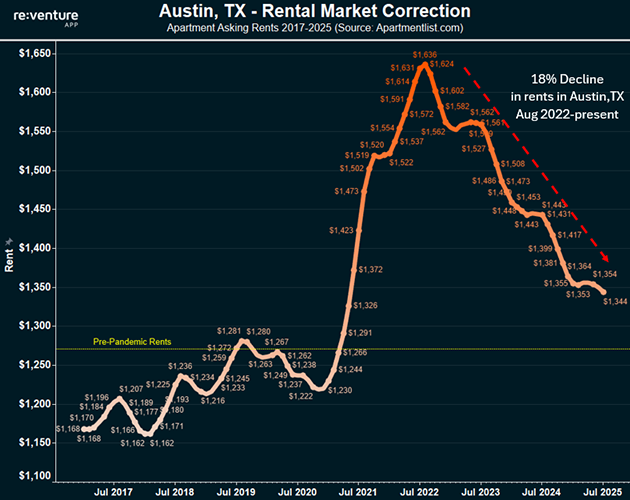
There are more innovative startups in Austin than NYC. That’s shocking given New York has about 7.5 million more people.
I can’t help comparing B.A.N.A.N.A. world to my home in Abu Dhabi. Over the past few decades new airports, roads, neighborhoods and towers have sprouted up from the sand.
To be clear, San Francisco, LA and Austin are still the beating heart of global innovation. There’s more cutting-edge technology being masterminded in a few square miles of the Bay Area than anywhere else on Earth.
But most of it is early, fragile and at risk of being regulated out of existence before it scales.
We have to fight The Blight. If these stories stay buried in quiet meetings with city inspectors, The Blight wins by default.
We have to call out silly rules and say:
This is insane.
Elon Musk’s xAI recently turned a 750,000‑square‑foot shell in Memphis into the world’s largest AI data center. In just 122 days.
That’s roughly half the time it takes to build a typical 1,800‑square‑foot American home!

Who will power all these new data centers? Nuclear startup Valar Atomics wants to build “gigasites” packed with hundreds of mini‑reactors.
Valar recently became the first startup in history to split the atom with its own reactor core. In barely two years it went from slide deck to a real fission core going critical.
The question isn’t “Can we still build?” We can.
America has a small army of ambitious founders driven to build the future that’ll make your grandkids’ lives 10X more prosperous than yours.
But only if we let them.
Let’s make it happen, my fellow rational optimist.
Share your overregulation stories in the comments.
Please forward this to your friends and family!
Together we can defeat B.A.N.A.N.A. world.
—Stephen McBride


