
The Starlink of drinking water
Updated: Sep 8
Desal in a beer cooler
In today’s Diary:
My first book just went live
Desert to oasis, in a box
$42 billion, 4.5 years, one house
Why dads are the best career hack
The one secret to living longer
Hey Rational Optimist,
My wife and I landed back in Abu Dhabi last week after a summer overseas in Dublin.
It's great to be back! I was hotter in an Irish bedroom than I'd been in Abu Dhabi at 40°C+ (104°F+). No one has air conditioning in Ireland. You leave the window open and pray for a breeze.
Life is better in lots of little ways here. I can get almost anything delivered to my door in an hour. It takes five days to receive anything in Ireland. Everyone’s always talking about politics in Ireland. Here nobody does. The thing just gets done.
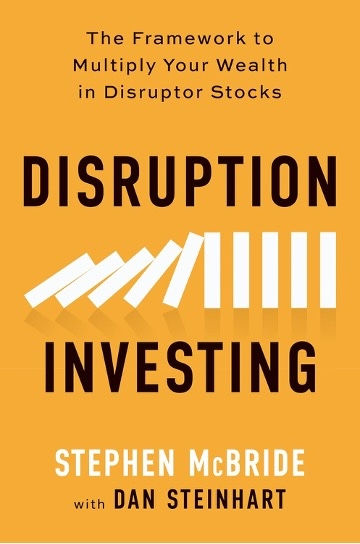
Along with the move back I'm in the middle of launching a book. It's titled Disruption Investing and is about my experiences learning how to invest in disruptive companies, which is my day job.
Most of the companies I write about here at ROS are private. There are plenty of great publicly traded companies too, and the book lays out my framework for finding and investing in the best ones.
The book is unaffiliated with Rational Optimist Society. But if you’re into investing, technology, or just love a good story, you can pre-order your copy here. I’ve been told it’s an easy and enjoyable read. For now we’ve priced it at $3 to encourage as many pre-orders as possible.
So this week's Diary is a mash-up of stories: a box that drinks the ocean… the one thing accelerating almost every founder’s career… and a number I can't stop thinking about.
In Abu Dhabi it only rains about four inches a year.
Yet I turn on the tap, and as much drinkable water as I want comes out.
Wilfred Thesiger's Arabian Sands is the story of crossing the largest sand desert on Earth by camel. Thesiger wrote he would forgo any other comfort to drink clean water.
People here used to pray to God for rain. Now they make water from the sea.
Desalination, turning seawater into water you can drink, transformed a desert into an oasis.
An hour up the road in Dubai the world’s largest desalination facility pumps out enough fresh water to fill 890 Olympic swimming pools every day. Abu Dhabi alone makes close to a tenth of all the desalinated water on the planet.
97% of Earth’s water is ocean you can’t drink. First, you have to take out the salt.
The best way to do it today is pushing the water through a filter. Reverse osmosis is a plastic sheet with holes big enough for a water molecule and too small for salt.
“Desal” is one of the most under-celebrated successes of our lifetime. The cost of desalinated water has fallen more than 70% since 1990. And it’s changed the fortunes of nations.
In 2009 Israel was so short on water it ran TV ads begging people to save it. Then it built five huge desal plants along its Mediterranean coast.
Today those plants supply 80% of its drinking water. It’s refilling the Sea of Galilee (the lake of the loaves and fishes) and even selling water to Jordan. From water-poor to water-rich in a decade!
Yet over 2 billion people still don't have safe drinking water at home.
The problem is desal only comes in one size: supersize. San Diego's desalination plant cost a billion dollars and took 17 years to open.
If the minimum order is a billion dollars, your only customers are governments. If your customers are governments, your route to market takes decades. So the only people who ever get desal water are people who already have a functioning water utility.
If you live in a fishing village in the Philippines or an island off Colombia, you’re out of luck.
"We're going to make more desal units in a month than currently exist in the world..."
That's what Vital Lyfe founder Jon Criss told me when I visited his factory in Torrance in July:
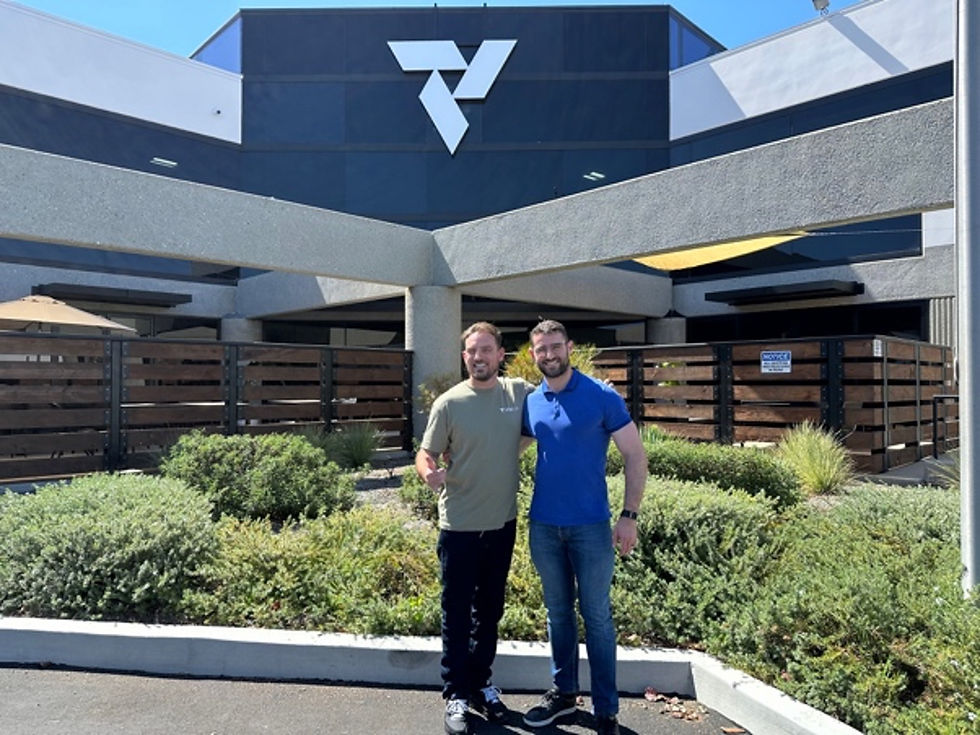
Jon and his co-founder Andrew Harner spent 22 years at SpaceX between them. Jon started on Dragon and made it the first privately built spacecraft to fly to orbit twice. He spent his last years on Starlink's high-volume manufacturing.
Getting fast internet used to mean someone running a cable to your house. Fine in Manhattan. But a farmhouse in Montana was stuck with dial-up speeds. Too expensive to run a cable to one house.
Starlink leapfrogged cable by putting the network in the sky.
Vital Lyfe is running that playbook to build the "Starlink of water." It’s putting a billion-dollar plant into a $749 box called Access:
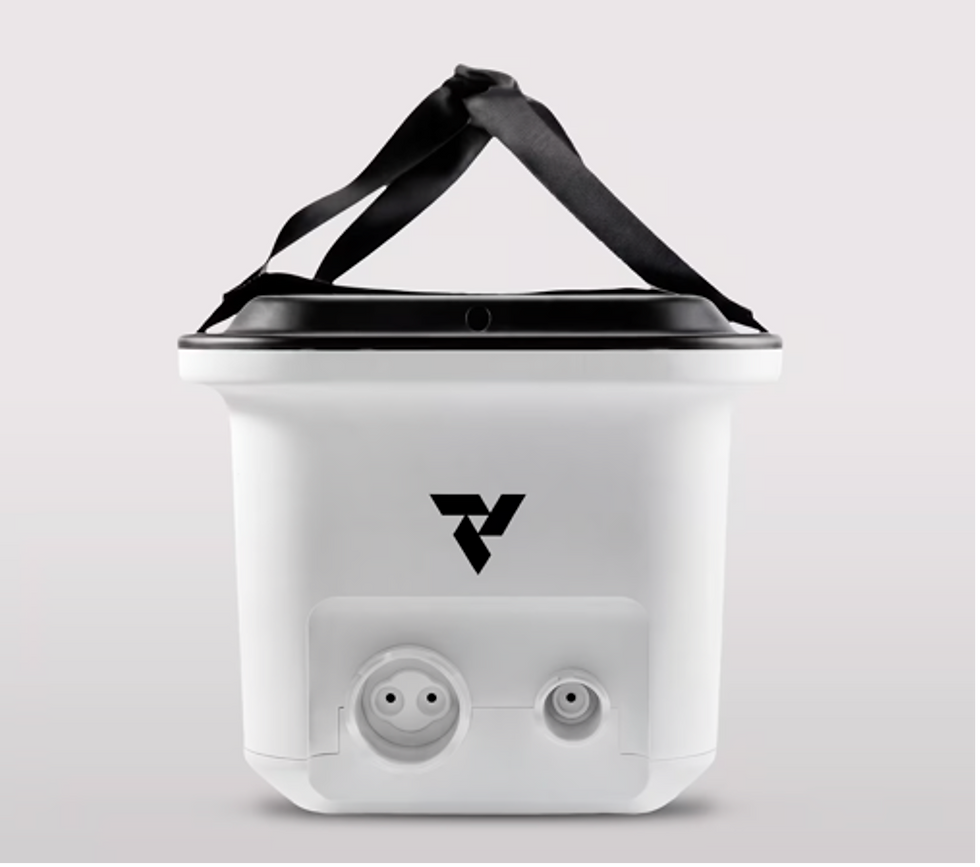
Access weighs 25 pounds and looks like a beer cooler. I lifted it one-handed. You drop a hose in the ocean, press a button, and get six gallons of clean, fresh water every hour.
It’s designed to pass what Jon calls the “Terry test.”
"My mom's name is Terry," Jon told me. "I love my mom. She's awesome, but she's not the most technically savvy.”
Terry will plug it in wrong, drop it, leave it in the sun, and try to use it before reading the instructions. Every design decision gets run past Terry.
I can report I passed the Terry test. I opened the lid, pressed a button, and Access started pulling seawater out of a tub and pushing fresh water out the other side. We drank it, and it tasted fine.
Vital Lyfe will start shipping thousands of desal units in October.
You can tell these guys spent years at SpaceX. Ask Jon the most important thing he learned there, and he rifles off Elon’s five-step algorithm for making stuff fast and cheap.
The coolest thing he showed me was the membrane. Did you know membrane manufacturing is a cozy oligopoly controlled by five companies? They charge $60 apiece.
Vital Lyfe makes its own for a fraction of the cost.
Lake Mead just hit its lowest level since it was first filled in 1937.
Lake Mead is the largest and probably most important reservoir in the US, providing water to California, Arizona and Nevada.
One 25-pound box can't refill Lake Mead. But a fleet of them could take the pressure off. Arizona tried to solve its water problems with a $5.5 billion plant that never got built. Instead of spending decades and billions of dollars trying to build a desal plant, you could buy each home its own water box. This is “Starlink math.”
In 2021 Congress put up $42 billion to run broadband to the 7 million American homes and businesses that didn't have it. The first home was connected in Nebraska… 4.5 years after the bill was signed!
That same $42 billion would have bought every one of those 7 million locations a Starlink dish and paid for four years of service, starting the week the bill was signed.
Vital Lyfe is part of “The Great Handoff.”
For most of the 20th century, civilizational-scale projects… from spaceships to splitting atoms to supersonic jets to pumping clean water… needed a government.
One by one those tasks are being handed off to businesses.
SpaceX reached orbit on private money in 2008. Boom Supersonic's XB-1 broke the sound barrier over the Mojave in January 2025. This summer five startups took their reactors critical.
Water is next on the handoff list, and Vital Lyfe is the clear leader.
You can reserve Access today for a fully refundable $8 deposit, credited toward the price if you buy. US deliveries start this fall.
I've toured a lot of factories this year. Jon and his team are locked in. My bet is they crush it.
Vital Lyfe is in our Innovators League 30, our handpicked list of the startups we think are inventing the future, selected from the 1,100+ we track in the ROS innovation database and the hundreds of founders we’ve met in person.
You can access the list for free here: The Innovators League 30.
The full database behind all 1,100+ companies we track is for Patrons. You can become a Patron here.
Since we started ROS less than two years ago…
Innovators invented a weekly shot that switches off hunger… cars started driving themselves… and a rocket the height of a 20-story building flew to space and was caught by a pair of metal arms.
If you time-traveled back to 1999 and told someone these stories they'd say: “What an amazing world you live in.”
And yet in a Pew survey six in 10 Americans said the country's best years are behind it. Last year the US fell to its lowest-ever rank in the World Happiness Report.
We live in an age of miracles, and people think the world is ending. That gap is why we started ROS. We must make the world more rationally optimistic for our kids.
The facts are on the optimists' side and have been for 200 years. But facts don't change the world. Stories do. And pessimism has always had the better story.
We win by telling better stories. That’s our job, and if you're an ROS member, it's your job too. Every week we cover the people building the future. Tell one of their stories to someone this week. Tell it to a kid or teenager who hasn’t been hardened by cynicism yet. You could change the trajectory of a life.
I was talking to another dad here the other day and caught myself sliding into the default mode of complaining.
Kids snap you out of it. They haven't learned to be bored by miracles yet. See the world through their eyes, and you'll see there’s never been more amazing stuff happening than right now.
Terraform Industries founder Casey Handmer told me:
"My fourth baby is so much fun…”
“It makes me sad that probably fewer than 1% of people get to experience babies on expert mode."
Congratulations Casey. I'm on #3 and chasing expert mode.
In investing terms, I am “long” fatherhood. I grew up without a dad, and it shaped me in ways I didn't understand until my twenties.
Dads have gotten WAY better over the past few decades. In 1965 the average American father spent two and a half hours a week looking after his kids. Now it's about eight.
Blogger Tim Urban is one of the best thinkers of our era. I got to meet him in Austin with Matt Ridley and Dan last year. A while back he wrote an essay called The Tail End.
His line that sticks with me is: "When I graduated from high school I had already used up 93% of my in-person parent time. We're in the tail end."
We have far less time with the people you love than you think.
My oldest daughter turns eight this year. That means I have about 10 summers left with her before she's too cool. That’s scary.
The difficult part is ambition and fatherhood pull on the same hours. I spend at least eight weeks a year on the road visiting founders. That's eight weeks I'm not here for the kids.
What I've landed on is being intentional. You can get a whole lot done in 10 hours if you don't waste time on B.S. The trick isn't more hours but fewer wasted ones.
As Casey says, fatherhood is "probably the most powerful nootropic and career accelerant I've seen."
The secret to living longer is…
Being an optimist.
A team from Boston University and Harvard followed nearly 70,000 nurses for a decade and 1,400 veterans for 30 years. The most optimistic lived 11% to 15% longer than the least optimistic.
Against an American life expectancy of about 79, that's 10 extra summers and Christmases with your loved ones… just for looking on the bright side. It's the lowest-hanging fruit I know.
The study found being in the top fifth for optimism was worth 10.9% more “life.” Never getting type 2 diabetes was worth 13.1%. Being optimistic is almost as important as avoiding diabetes!
This matters even more if you have kids. Optimism is largely learned. Everyone tells me anxiety is the big problem for children now.
Want a less anxious kid? Raise a more optimistic one.
Optimism just means you expect good things to happen and believe you can help make them happen.
So don't be a doomer around your kids.
Daniel Kahneman, the Nobel Prize winner who spent his career cataloguing the ways our brains go wrong, put it best:
"If you were allowed one wish for your child, seriously consider wishing him or her optimism. Optimists are normally cheerful and happy, and therefore popular; they are resilient in adapting to failures and hardships, their chances of clinical depression are reduced, their immune system is stronger, they take better care of their health, they feel healthier than others and are in fact likely to live longer."
Kahneman found the benefits go to the “mildly” optimistic. That's the "rational" in
Rational Optimist.
Long live rational optimists!
Please share to help this reach more rational optimists out there.
And here’s the link to my new Disruption Investing book. Pre-orders are open.
—Stephen McBride


